The 5 4 3 2 1 grounding technique, and what to do when it stops working
Try a shorter 5 4 3 2 1 grounding technique, learn when to stop counting, and find a safer next step when anxiety or panic makes it harder to use.
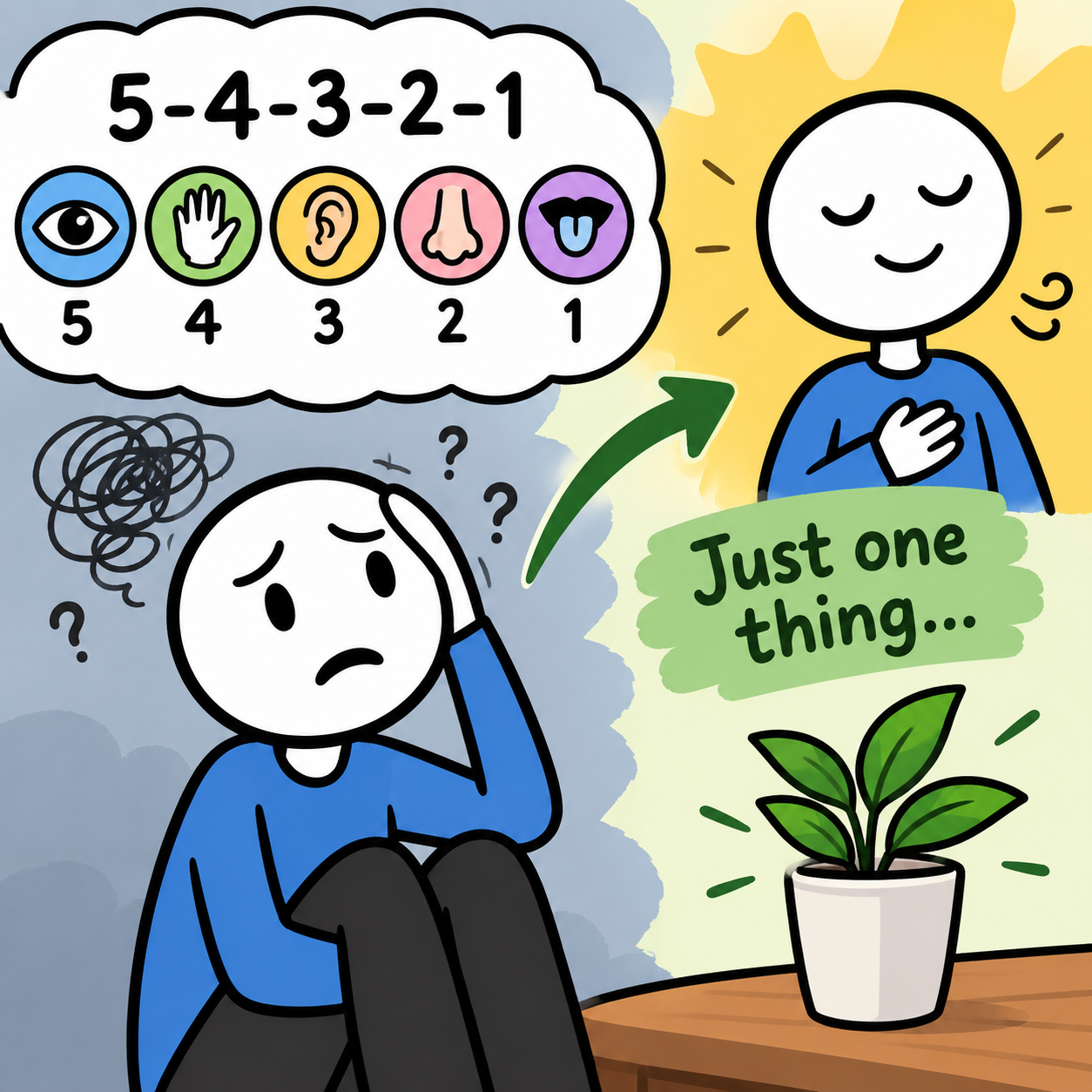
You reach the second smell in the 5 4 3 2 1 grounding technique and draw a blank. You start again, hoping a complete round will make the fear go away. By the third try, you are paying more attention to your pulse than to the room.
If this sounds familiar, the count may be asking too much of you in that moment. Grounding can start with one thing you see or touch right now. You can stop there, before the exercise becomes one more thing to get right.
You know the technique, so why has it stopped helping?

When anxiety builds, your attention can get caught on what might happen next. You check how fast your heart is beating, then wonder what the beat means, and the checking keeps you close to the fear. A detail in the room gives your attention somewhere else to go for a moment.
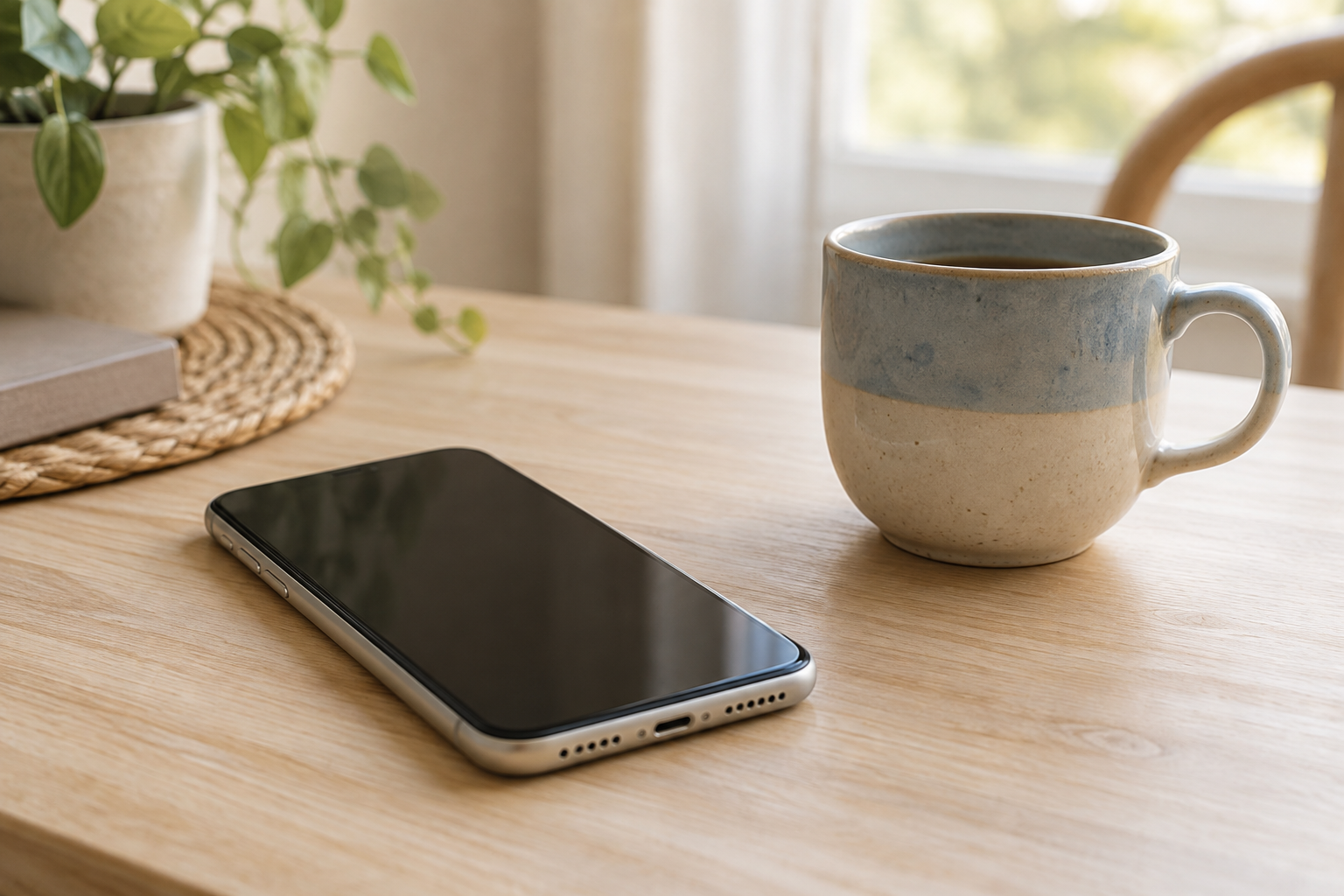
That small move is what sensory grounding is for. You might notice the blue edge of a mug and still feel shaky. What matters is whether you have enough room to choose what to do next.
I would be wary of any instruction that makes you wait for perfect calm before you carry on. It sets a hard test at the very time your mind is least able to sit one. If you can find your feet on the floor and decide to call someone, the exercise has given you something useful.
Timing helps, too. A familiar cue is easier to use when anxiety has only begun to rise, so you can practice noticing the room while you feel fairly well. During a strong wave of panic, a small task is easier to use than a sequence you have to remember.
Learn the full count when you feel able, and you can choose how much of it fits the moment.
How to do 5 4 3 2 1 grounding without making it a test
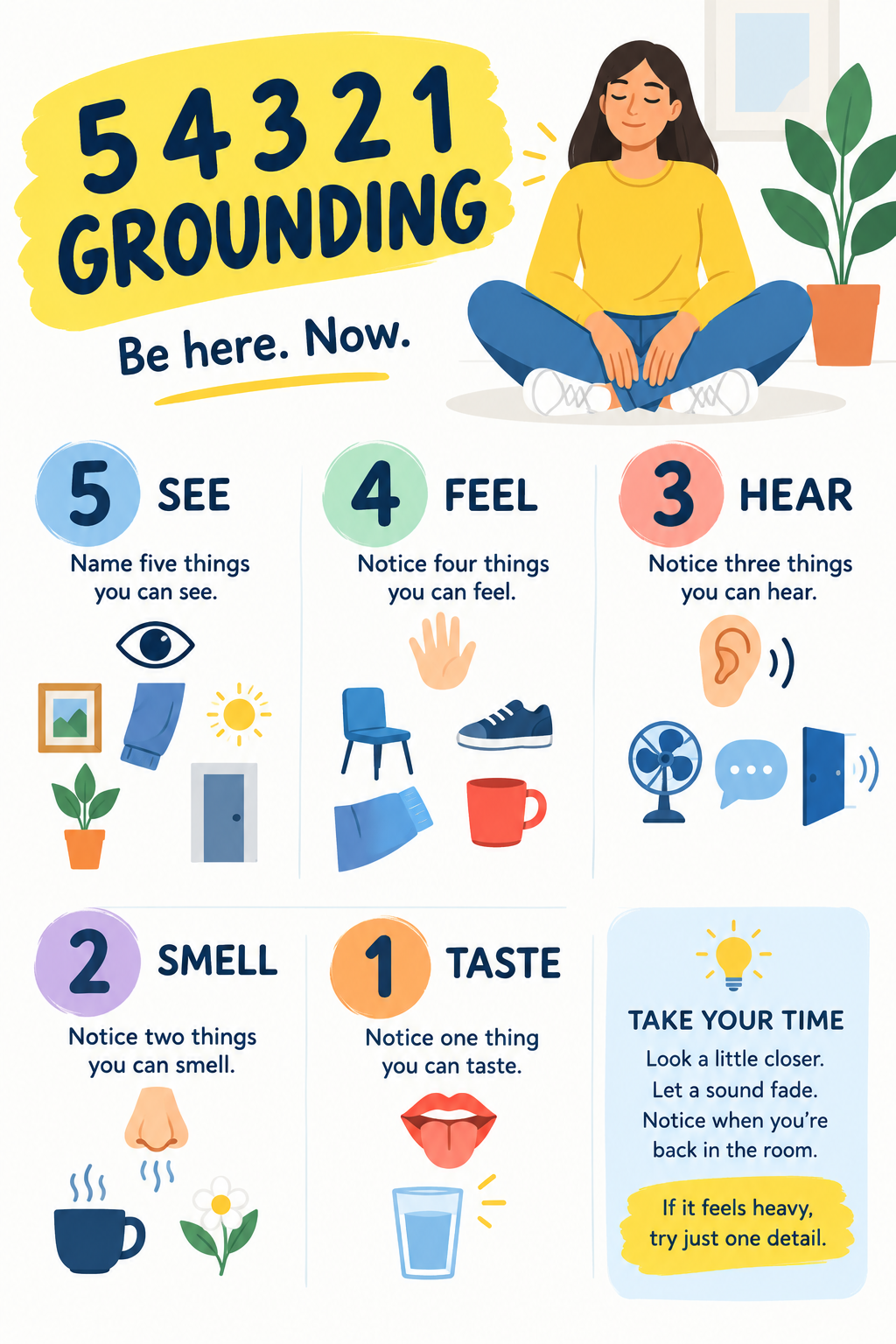
Begin where you are, as long as you are safe. Look around and name five things you can see. You could pick a mark on the wall, the fold in your sleeve, light on the floor and two other plain details. Ordinary objects work well.
Next, notice four things you can feel through touch. That might be the chair under you, your shoes against your feet, the fabric at your wrist and a cup in your hand. You can keep your eyes open throughout.
Then notice three things you can hear. Let nearby sounds count, including a fan or a voice in the next room. Notice two things you can smell if they are there, and one thing you can taste if a taste is easy to find.
Those numbers give the 5 4 3 2 1 grounding technique its shape. You can skip a sense when nothing comes to mind, because hunting for a second smell can pull you away from the simple act of noticing. Your answer can be as ordinary as “the cup is cool” or “the light reaches the door.”
As you go, give one detail a little more time. Look at the edge of the light, or listen until a sound fades. This helps you spend time with the place you are in.
When you notice that you have come back to the room, let that be your stopping point. You can use the whole sequence when it feels easy, and a single detail when the full count feels heavy. That single detail is enough to try a shorter version.
The shorter version starts with one thing

For quick grounding exercises for anxiety, I would start with one external detail. Pick something you can see or touch without searching for it. The corner of a table will do. So will the sound of water in a pipe.
Describe that detail in a few plain words. “The table has a rough edge.” “The water sound comes and goes.” Give it your attention for a few seconds, then decide on one next action. You might return to what you were doing or ask a person nearby to stay with you.
The stopping point matters. If you follow each detail with “Am I calm yet?”, the exercise can become a way of checking your anxiety over and over. Evidence on the effects of repeating the count is limited, so pay attention to how it works for you. You can leave the question unanswered and still take your next step.
Try this smaller version during an ordinary part of the day. Notice the feel of a door handle, then open the door and carry on. You are making the cue familiar, which may make it easier to recall when you feel unsettled.
If even one detail feels like too much, you have permission to put the exercise down. Your next choice may be to change where you are or get help from someone you trust. Pay attention if you find yourself doing another round only to check whether the fear has gone.
When another round makes things harder
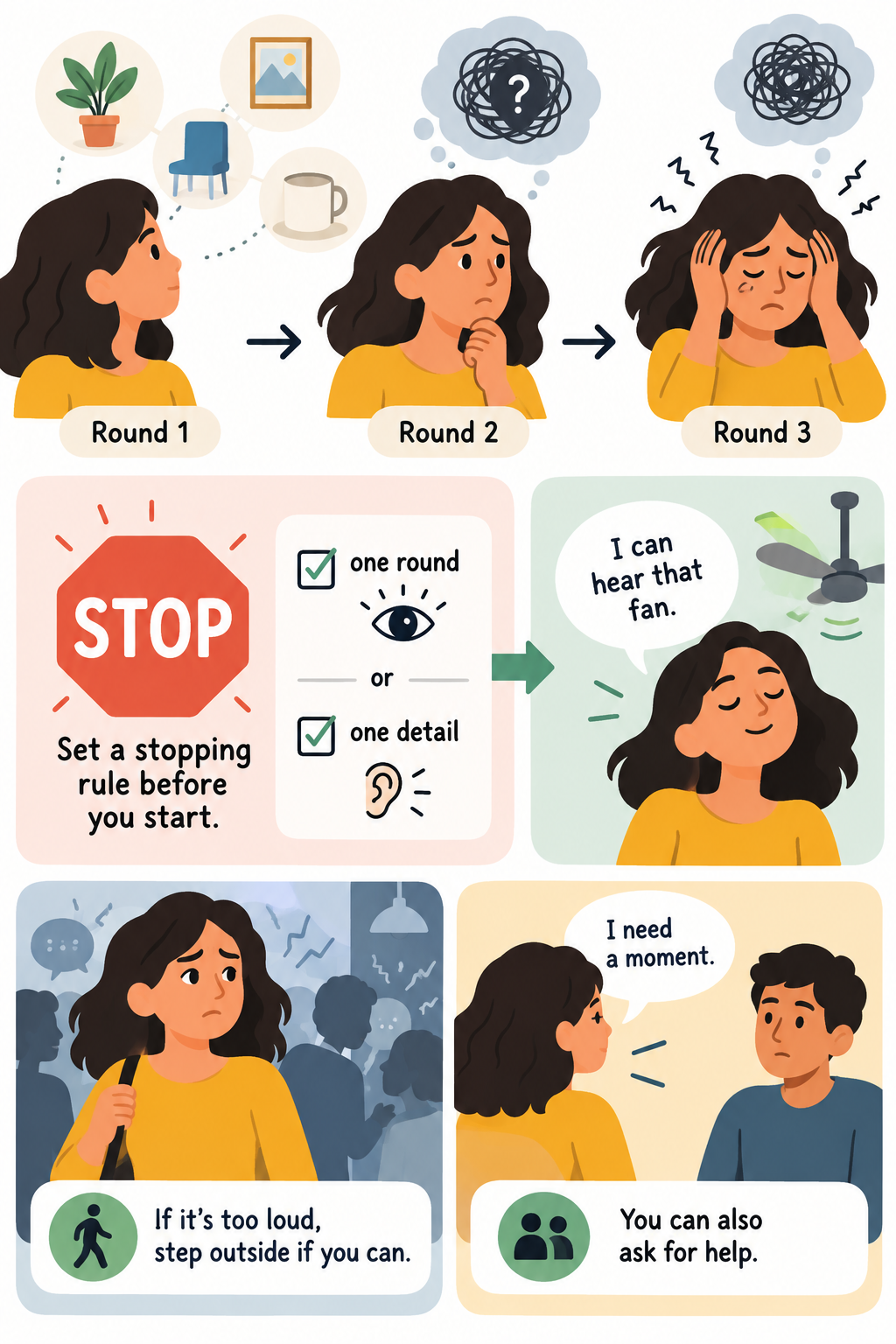
You finish the count and still feel anxious. That can lead to a second round, then a third, with each round serving as a check on whether the feeling has finally gone. Soon you are watching the fear more closely than the objects you named.
Notice the change in what you are doing. You began by looking outward, and now you may be asking your body for an all-clear. If the answer never feels certain enough, more counting can leave you tired and frustrated.
There is no need to blame yourself for getting caught there. An anxious mind looks for certainty, and a numbered exercise can seem as though it ought to produce a clear result. Give yourself a simple stopping rule before you start: one round or one detail, followed by a next action.
If remembering the order is hard during panic, drop the order. You can ask someone to name one thing they see and wait while you find it, or you can say aloud, “I can hear that fan.” A shorter cue asks less of a mind that is already busy.
Sometimes the setting itself needs your attention. If you are in a loud room and can safely step outside, do that. If you need to leave a demanding conversation, say you need a moment. Moving away or asking for help may do more for you in that moment than another round of counting.
Switch the anchor when your body feels hard to focus on

Some instructions begin with slow breathing. If watching your breath makes you more afraid, begin with something outside you. You can breathe normally while you look around.
This matters if you have lived through trauma or find internal sensations frightening. Being asked to study your heartbeat or breathing may increase your distress. An external anchor gives your attention somewhere to rest while you decide what feels manageable.
For somatic grounding exercises for beginners, keep the choice gentle and concrete. Hold a textured object and feel its surface against your fingers, or place your hands around a warm cup at a comfortable temperature. If touch feels unwelcome, listen to music and follow one instrument for a few seconds.
Movement can help when sitting still leaves you more tense. Stand up and feel your shoes meet the floor as you walk to another room. If it is safe, you could step outdoors and notice the air on your face. Keep the pace comfortable so the walk stays easy to follow.
Another person can be an anchor, too. You could say, “Please tell me one thing you can see,” and let them guide you at your pace. They can also stay with you while you make a call or move somewhere quieter.
Choose the option that feels workable right now. If an exercise brings dizziness or more panic, stop it and seek support. Do the same if you feel far away from your surroundings. Your response can help you decide what kind of help fits this moment.
What grounding can offer during a panic attack
When you search for grounding techniques for panic attacks, you may need something you can do immediately. Sensory grounding offers a brief way to turn toward the room while fear is present. You may still have a racing heart afterward, and you can use what you noticed to make a safer next choice.
Research on this exact sequence is limited. In a 2025 study, K. M. Scott and colleagues taught nursing students a five-senses technique as part of a 40-minute session about test anxiety (1). Ninety-four students completed the first survey, and 48 completed the follow-up.
The study had one group and did not test the count on its own, so it tells us little about its effect during panic attacks. For now, your own response can guide how you use it.
You may also come across research using “grounding” to mean direct contact with the earth, sometimes called earthing. That practice differs from naming sensory details. Here, a sound or a visible object helps you notice what is around you and decide what you need.
Take new or severe chest symptoms seriously, especially when they feel unlike what you have experienced before. Seek urgent medical assessment when you are unsure whether a symptom is panic or a medical problem. Get care promptly when you may need it.
If panic keeps returning, a coping skill can sit alongside proper care. You deserve support that looks at the pattern behind the episodes and at how they affect your life.
Know when to get more support
Try grounding early when you can, and let an ordinary moment be a place to practice the one-detail version. Then pay attention to your life beyond the exercise. Notice whether anxiety affects your sleep or work, and whether fear of another episode is keeping you from places you need to go.
When anxiety, panic or dissociation keeps disrupting daily life, speak with a qualified mental health professional or clinician. You can tell them what happens when you try grounding, including any urge to repeat it until you feel certain. That detail can help them work with you on an approach that fits.
For now, make the plan small enough to remember: find one thing outside you and describe it briefly. Then choose your next action. You may feel calm later, or you may need care and company while the feeling passes. You can stop counting and take the next step that helps you stay safe.
When your mind is steadier, name what matters
The Values Exercise is a free worksheet you fill in by hand. It takes about 45 minutes and ends with three values in your own words.
Get the free Values ExerciseDisclosure: some links on this site may be affiliate links. If you buy through them I may earn a commission, at no extra cost to you. Opinions are my own.